

Dnipro University of Technology — Compliance with the Time
|
|
The Department of Ecology and Environmental Protection Technologies at Dnipro University of Technology continues to expand scientific cooperation with European universities and to involve young researchers in modern laboratory studies. The latest stage of this work is a research visit to TU Bergakademie Freiberg (Germany).
Professor Oleksandr Kovrov of the Department of Ecology and Environmental Protection Technologies, together with biology students Alina Bohun and Yuliia Ishchenko, arrived in Freiberg to carry out a joint research programme. The work is being conducted in the environmental laboratory of the Institute of Biosciences, where the team is investigating the physicochemical and bioecological properties of contaminated soils by combining conventional soil analysis with modern biological approaches.
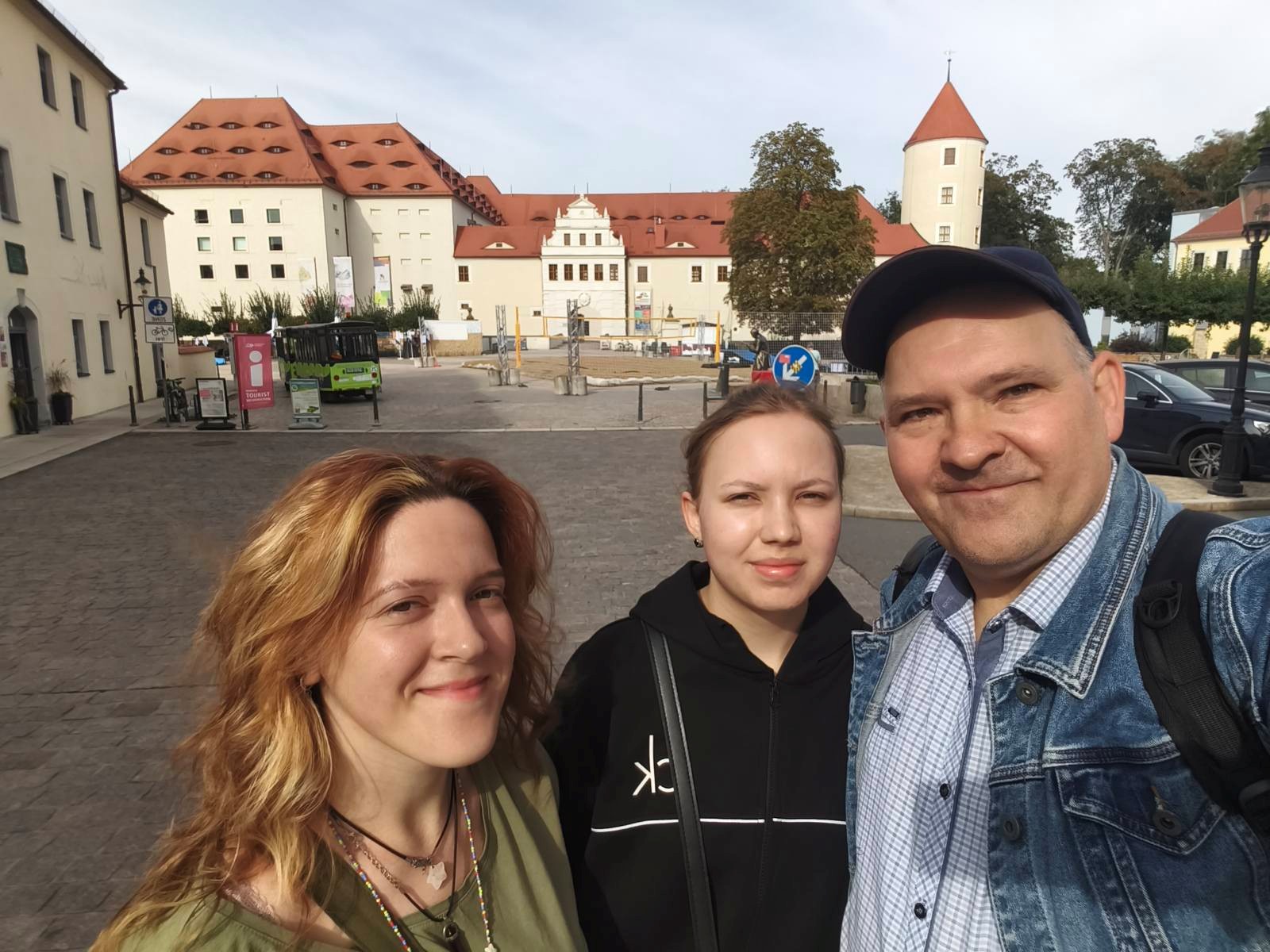
Fig. 1. Professor Oleksandr Kovrov, Alina Bohun and Yuliia Ishchenko in the central square of Freiberg near the renowned Terra Mineralia mineral museum. The first photograph symbolically opens this year’s stage of scientific mobility. Freiberg combines long-standing traditions in mining, mineralogy and the natural sciences, while the nearby Terra Mineralia museum provides a particularly meaningful setting for researchers working on technogenically altered soils, mineral components of contamination and ecological restoration of disturbed areas.
This year, the research programme covers several interconnected areas. First, soil salinity and pH are determined as key parameters characterising soil reaction, ionic conditions and the living environment of plants and microorganisms. A separate line of research focuses on the assessment of heavy metal contents, which makes it possible to characterise the level of technogenic pressure and potential environmental risks. The biological component of the work involves searching for and studying resistant microorganisms and soil algae capable of remaining viable under stressful conditions caused by contamination, salinity and other adverse factors.
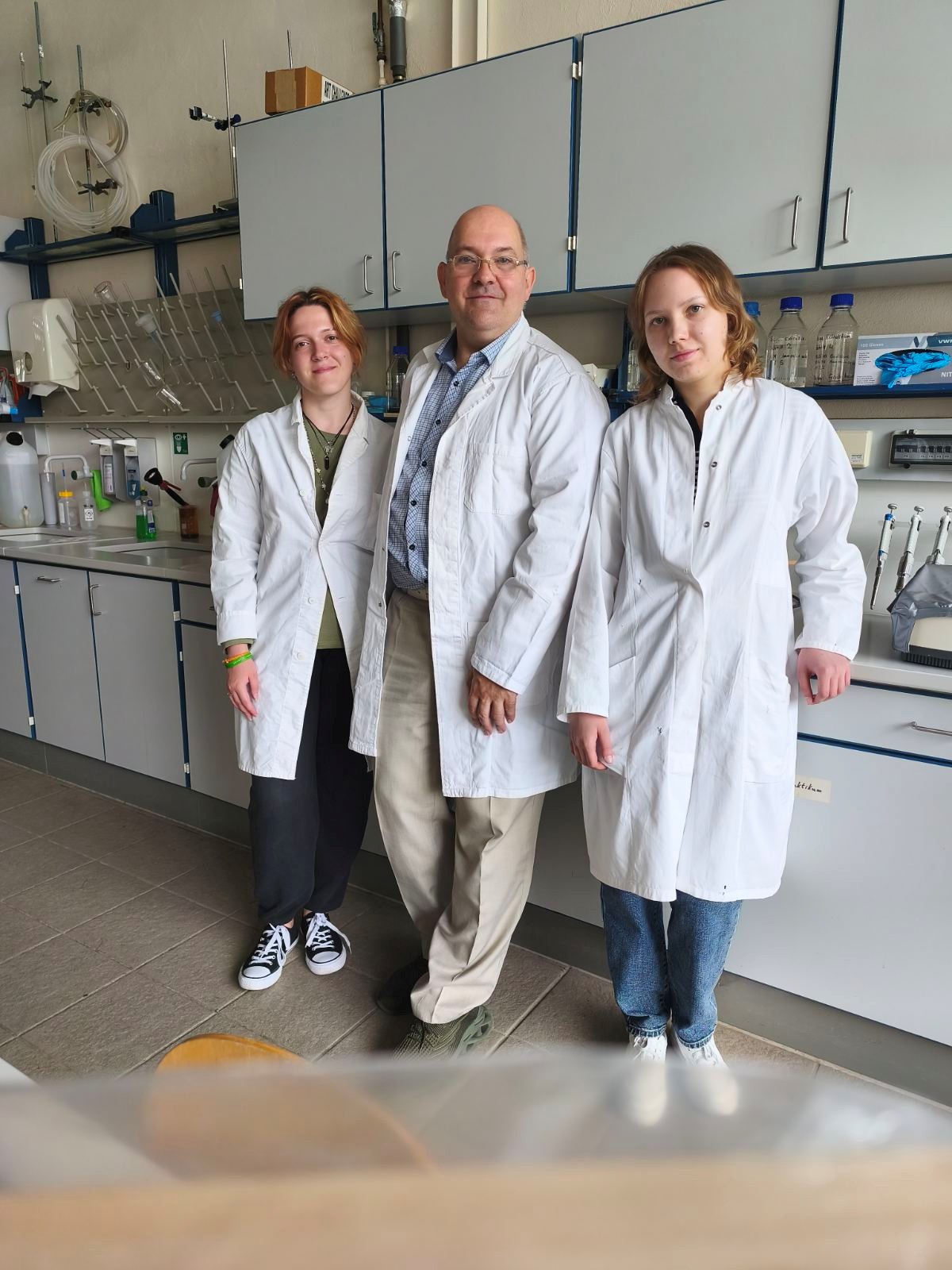
Fig. 2. Research team from Dnipro University of Technology in the environmental laboratory of the Institute of Biosciences at TU Bergakademie Freiberg. The laboratory work in Freiberg is important not only scientifically but also educationally. For Alina Bohun and Yuliia Ishchenko, it provides an opportunity to participate directly in the full cycle of experimental research: from sample preparation and work with laboratory equipment to discussion of the results and formulation of scientific conclusions. Such interaction develops the practical competences of young researchers while strengthening professional links between Ukrainian and German scientists.
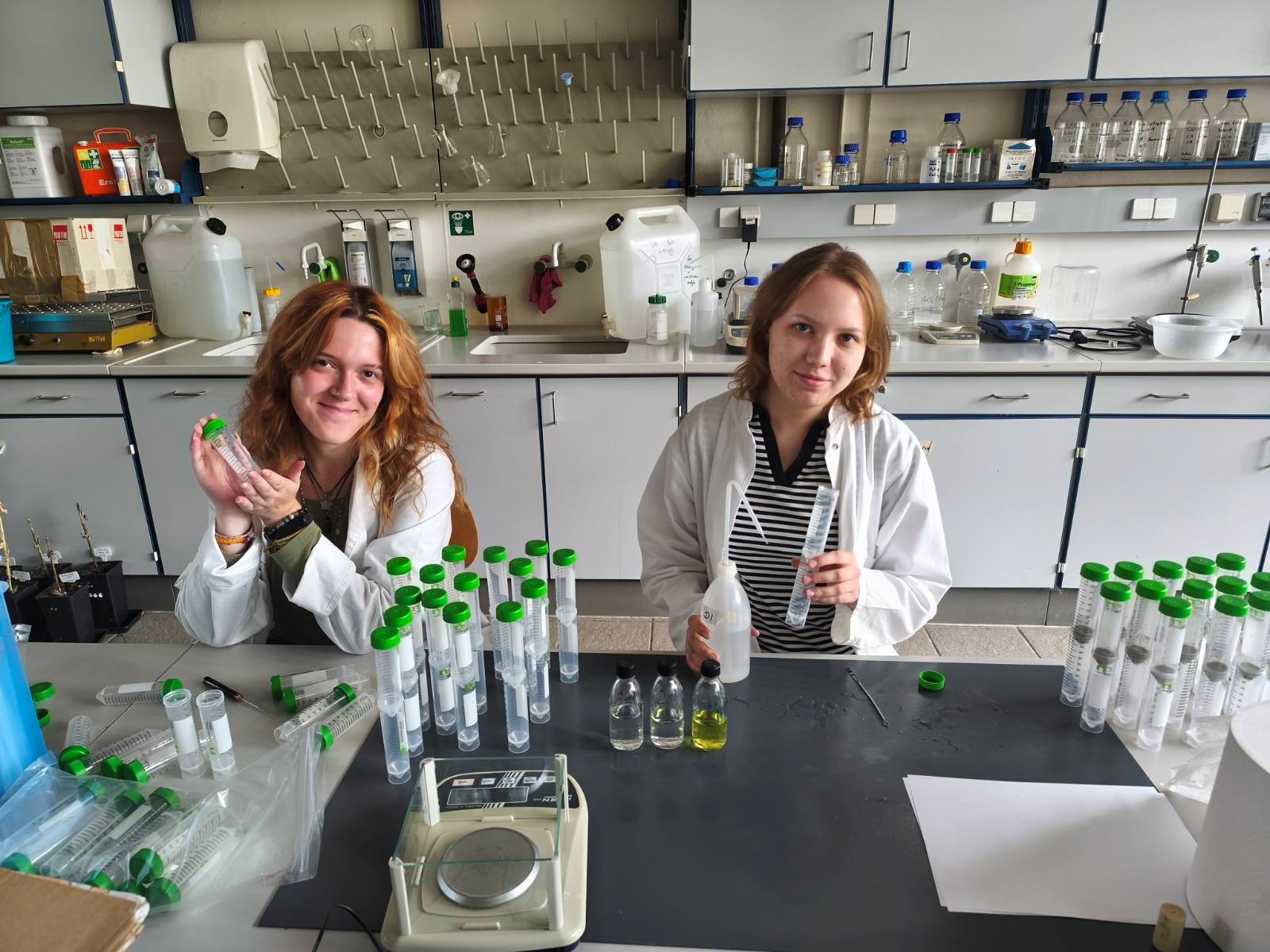
The team pays particular attention to biocrusts - thin, biologically active surface layers of soil formed by cyanobacteria, soil algae, fungi and other organisms. In degraded and technogenically disturbed areas, such communities are of considerable interest because they can contribute to soil-surface stabilisation, accumulation of organic matter and the creation of more favourable conditions for subsequent ecosystem recovery. For this reason, the search for resistant strains of microorganisms and algae is a promising direction for future biotechnologies of land reclamation and phytoremediation. Fig. 3. Alina Bohun and Yuliia Ishchenko preparing soil samples for laboratory analysis of physicochemical and biological parameters. The third photograph captures one of the working stages of the experiment - sample preparation and processing of series of soil samples. Careful sample preparation is essential for subsequent measurements of pH and salinity, analytical assessment of heavy metal contamination and biological studies. Parallel processing of a large number of samples makes it possible to compare different types of soil environments and identify relationships between chemical parameters and the resistance of microbial and algal communities. The integrated approach, which combines physicochemical characterisation of soils with analysis of their biological component, is particularly important for developing nature-based restoration technologies. The results obtained can be used to substantiate bioremediation and phytoremediation methods, select resistant microorganisms and algae, and create experimental biocrust systems for the stabilisation and gradual recovery of contaminated and degraded soils. The international research work in Freiberg is an important step in the development of the scientific school of the Department of Ecology and Environmental Protection Technologies. It brings together current environmental challenges, modern laboratory training for young researchers and the expansion of Dnipro University of Technology’s European partnerships. We wish the team productive work, valuable experimental results and new joint research projects!
|
© 2006-2026
Інформація про сайт