

Dnipro University of Technology — Compliance with the Time
|
|
Dnipro University of Technology continues to expand its international academic ties with European universities. An important step in this process has been cooperation within the Q-Helix European University Alliance, supported by the Polish National Agency for Academic Exchange (NAWA). Dnipro University of Technology participates in the alliance as an associate partner, while the University of Prešov (Prešovská univerzita v Prešove, Slovakia) is one of its full members. This network of partnerships transforms short-term academic visits into a means of establishing long-term collaboration between researchers and universities.
From 26 to 30 October 2026, Professor Oleksandr Kovrov of the Department of Ecology and Environmental Protection Technologies is undertaking a research visit to the University of Prešov under the Q-Helix project. The visit opens up new opportunities for cooperation in ecology, microbiology, and nature-based technologies for environmental restoration.
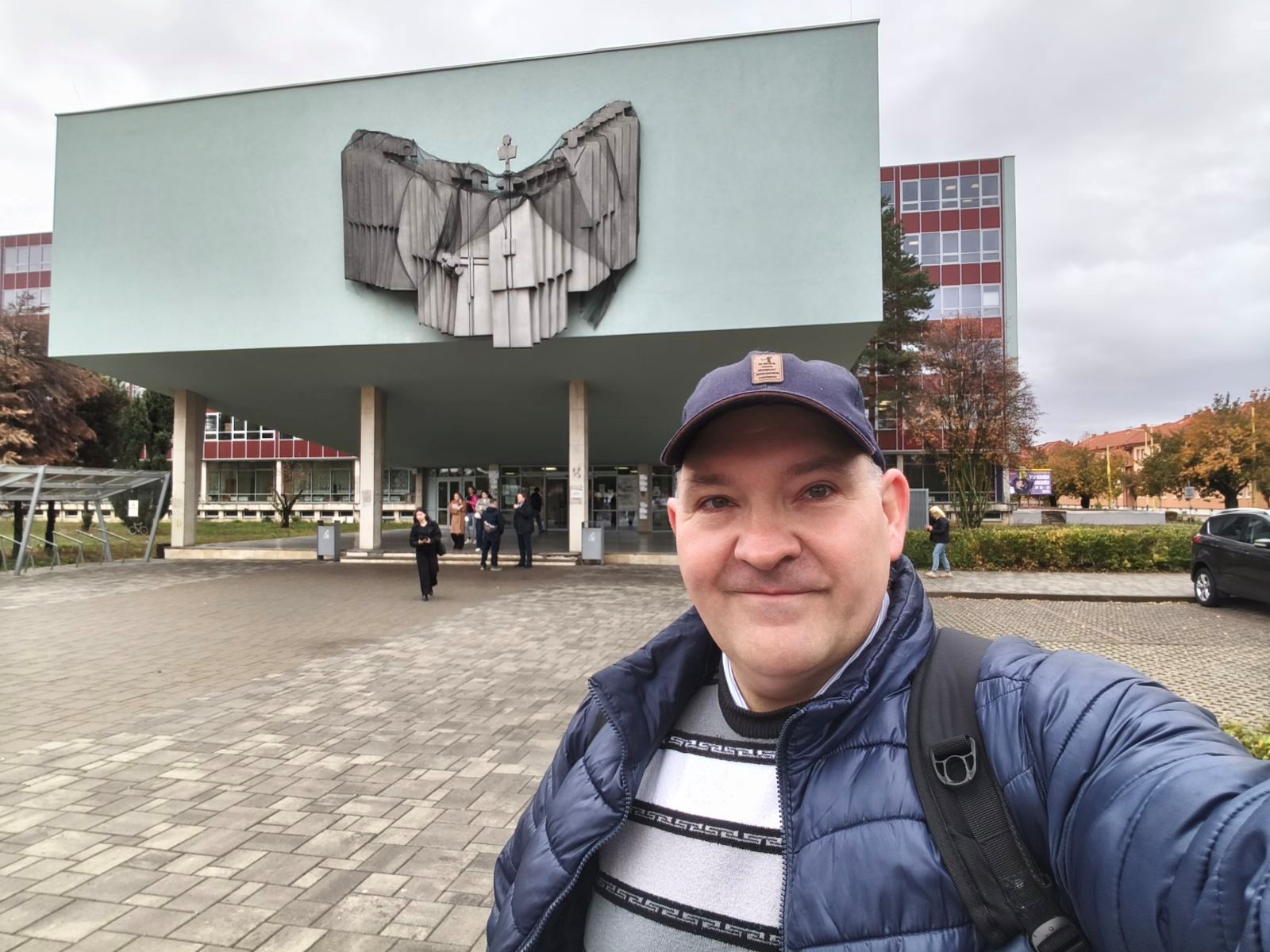
Fig. 1. Professor Oleksandr Kovrov in front of the main building of the University of Prešov during his research mobility visit under the Q-Helix programme. The Q-Helix Alliance promotes the Quintuple Helix model, which brings together universities, businesses, public authorities, civil society, and the natural environment. Environmental protection and restoration is one of the alliance’s priority areas. The project combines research mobility, knowledge exchange, the development of joint research initiatives, and innovative approaches to international education.
The most valuable aspect of the visit has been direct contact with researchers at the Faculty of Humanities and Natural Sciences of the University of Prešov. In particular, Professor Kovrov met Associate Professor Lenka Bobuľská (doc. Ing. Lenka Bobuľská, PhD.), whose research interests encompass soil ecology and environmental microbiology. These fields closely align with the research focus of the Department of Ecology and Environmental Protection Technologies at Dnipro University of Technology. Exploring the Slovak university’s research environment and laboratories and meeting its researchers helped identify promising areas for future scientific collaboration. Of particular interest is the integration of physicochemical methods of soil analysis with microbiological and bioindication approaches, enabling a comprehensive assessment of the environmental impacts of anthropogenic contamination. Such an interdisciplinary approach is essential for developing effective measures to protect and restore degraded land.
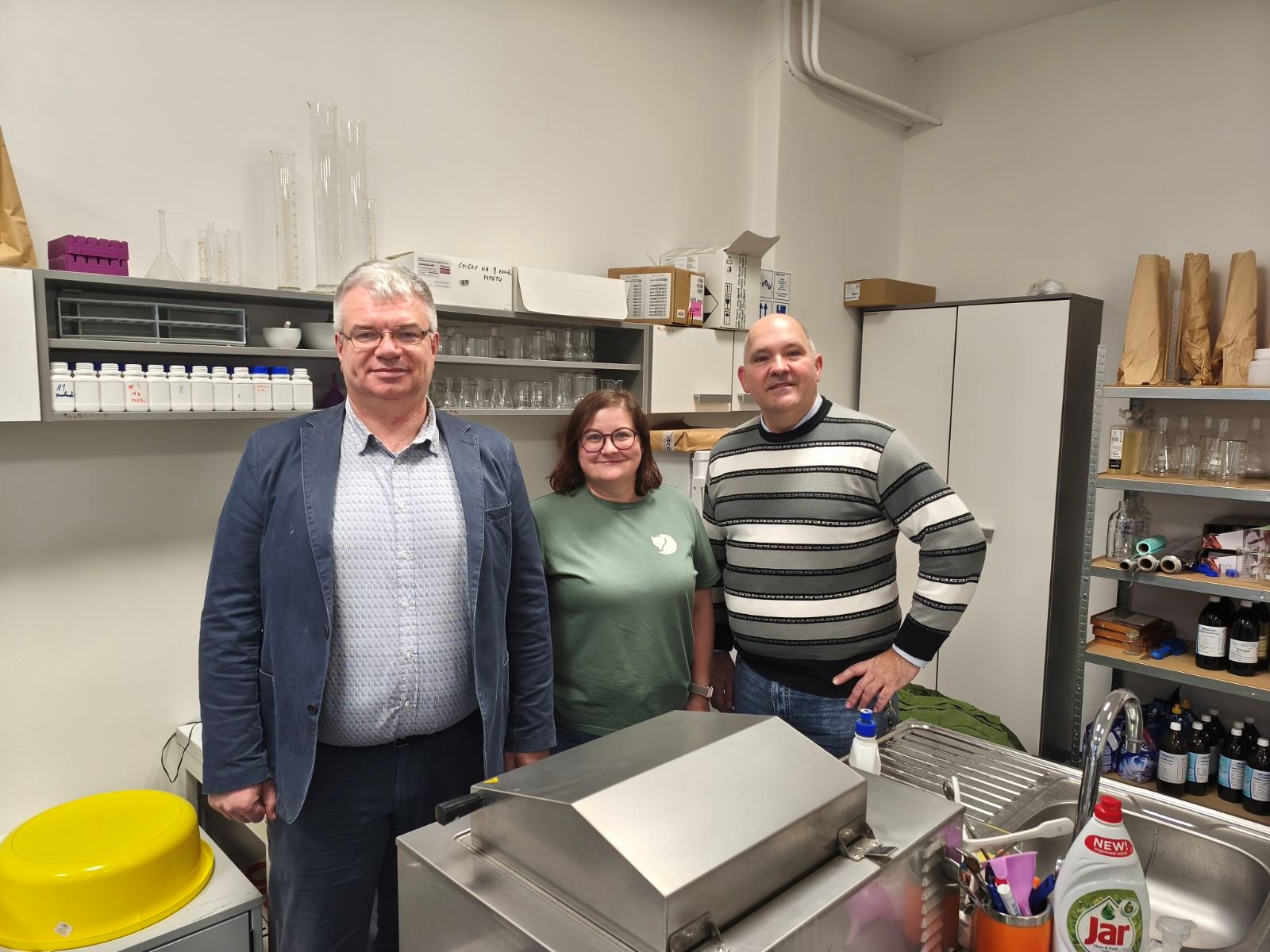
Fig. 2. Professor Oleksandr Kovrov with colleagues from the University of Prešov during a laboratory visit and discussions on prospects for research collaboration. Shared research interests provide a foundation for Ukrainian–Slovak cooperation not only between individual scientists but also between research teams. In the future, this cooperation could include comparative studies of contaminated soils, the use of biological indicators to monitor soil quality, and the preparation of joint publications in international scientific journals. Collaboration between Dnipro University of Technology and the University of Prešov demonstrates the practical value of European university alliances. Q-Helix goes beyond the formal exchange of participants: its potential lies in building lasting professional connections, identifying common research topics, and establishing international teams capable of addressing pressing environmental challenges. Importantly, Ukrainian universities participate in such cooperation as equal partners in scientific dialogue, contributing their own expertise, research findings, and practical solutions.
Research mobility in Prešov represents an important step towards strengthening Ukrainian–Slovak academic ties. It is hoped that personal contacts with colleagues, shared interests in soil ecology, and opportunities offered by the Q-Helix Alliance will lay the foundation for joint research, publications, and new international projects. In this way, academic mobility becomes a long-term partnership for sustainable development and environmental restoration.
|
© 2006-2026
Інформація про сайт